Entertainment is an integral part of human culture, shaping how we spend our leisure time, connect with others, and engage with the world around us. Over the centuries, entertainment has taken on many forms, evolving in tandem with technological advancements, cultural shifts, and societal needs. From the simple joys of storytelling around a campfire to the global streaming platforms we have today, the world of entertainment has undergone a remarkable transformation. This blog post delves into the history and evolution of entertainment, exploring how it has adapted to the digital age and what the future holds for this dynamic industry.
The Origins of Entertainment: Ancient Times to the Renaissance
Entertainment has existed for as long as human civilization. In ancient times, entertainment was often a communal experience. People gathered around fires, in public squares, and in palaces to enjoy live performances, storytelling, and music. Oral traditions were a significant form of entertainment, and stories passed down from generation to generation helped to preserve history, culture, and morals.
In ancient Greece and Rome, theater was a central form of entertainment. The works of playwrights like Sophocles, Euripides, and Aristophanes were performed for large audiences, and these performances were not only a form of entertainment but also a way to engage with political and social issues. The Roman gladiatorial games, although violent, were another form of entertainment that captured the masses.
The Renaissance period in Europe marked a significant turning point in entertainment. With the rise of the printing press and the spread of literature, entertainment became more accessible to the general public. The invention of the printing press allowed for the widespread distribution of books, plays, and other written works, bringing literature to a much broader audience. Theater, too, continued to evolve, with playwrights like William Shakespeare creating some of the most enduring works in Western culture. During this time, music, dance, and the visual arts also flourished, making the Renaissance a golden age for creative expression.
The Birth of Modern Entertainment: The 19th Century and the Rise of Mass Media
The 19th century brought about significant technological advancements that changed the landscape of entertainment forever. The invention of the steam engine, the rise of industrialization, and improvements in communication allowed for the mass production and distribution of entertainment. This period saw the emergence of new forms of media, including radio, photography, and film.
The Rise of Cinema
One of the most significant developments in entertainment during the late 19th and early 20th centuries was the birth of cinema. The Lumière brothers’ first public screening of moving pictures in 1895 marked the beginning of the film industry. Early films were short, silent, and simplistic, but they captured the imagination of audiences around the world. As cinema evolved, so did the technology and techniques used to tell stories on the big screen.
By the 1920s, the introduction of synchronized sound in films, exemplified by The Jazz Singer in 1927, revolutionized the industry. Hollywood emerged as the entertainment capital of the world, and film studios began producing blockbusters that attracted millions of viewers. The 1930s and 1940s saw the golden age of Hollywood, with iconic films like Gone with the Wind and Casablanca becoming cultural touchstones.
The Birth of Radio and Television
In the early 20th century, radio became the first mass medium capable of transmitting entertainment to a broad audience. People gathered around their radios to listen to news, dramas, comedies, and music broadcasts. Radio helped create a sense of national unity, as families across the country tuned into the same shows and events.
Television followed in the 1940s and 1950s, and by the 1960s, it had become the dominant form of entertainment in many households. Television shows like I Love Lucy and The Twilight Zone became cultural icons, while the broadcast of major events like the moon landing in 1969 brought millions of viewers together for shared experiences. The introduction of color TV further transformed the way audiences consumed entertainment, making the visual aspect of television even more compelling.
The Digital Revolution: The 1990s to the 2000s
The 1990s marked the beginning of a new era for entertainment with the rise of the internet and digital technologies. These innovations not only revolutionized how entertainment was produced and consumed but also led to the creation of entirely new forms of entertainment.
The Internet and the Birth of Digital Content
The internet became widely accessible in the 1990s, opening up new possibilities for entertainment. Websites, forums, and blogs allowed people to share and consume content in ways that were previously impossible. The creation of the first websites and the advent of search engines like Google made it easier for people to find entertainment online.
This era also saw the rise of digital content creation. The advent of affordable video cameras and editing software allowed individuals to produce their own films, music videos, and other types of content. This democratization of content creation laid the foundation for the explosion of online platforms like YouTube, which launched in 2005, allowing anyone with an internet connection to upload and share videos.
The Rise of Video Games
While video games had been around since the 1970s, the 1990s marked the beginning of a golden age for gaming. Advances in graphics, sound, and gameplay mechanics allowed video games to become a mainstream form of entertainment. Consoles like the Sony PlayStation and Nintendo 64 brought games into millions of homes, and the 1990s saw the rise of iconic franchises such as Super Mario, The Legend of Zelda, and Final Fantasy.
The internet also played a pivotal role in the growth of online gaming. Multiplayer games like Counter-Strike, Warcraft, and World of Warcraft allowed players to connect with others around the world, creating virtual communities and new forms of social interaction. This laid the groundwork for the esports industry, which has become a global phenomenon in recent years.
The Birth of Streaming Platforms
By the late 2000s, traditional media such as cable television began to face significant competition from digital platforms. Companies like Netflix, Hulu, and Amazon Prime revolutionized the way people consumed television shows and movies. The idea of “binge-watching” entire seasons of shows at once became a popular cultural phenomenon.
The streaming model, where users can watch content on-demand, replaced the traditional model of scheduled television broadcasts. This shift not only gave consumers more control over what they watched but also allowed content creators to experiment with new formats and storytelling techniques.
The Current State of Entertainment: A Digital-First World
Today, entertainment is dominated by digital platforms and new technologies that continue to push the boundaries of what is possible. From video streaming services to social media, entertainment is more accessible, interactive, and personalized than ever before.
The Streaming Boom
Streaming platforms have become the go-to source of entertainment for millions of people worldwide. Services like Netflix, Disney+, and Spotify have become household names, offering vast libraries of movies, TV shows, and music that users can access anytime, anywhere. The convenience of streaming, combined with the variety of content available, has made it the preferred method of consuming entertainment for many people.
Moreover, the rise of original content produced by streaming services has changed the entertainment landscape. Shows like Stranger Things, The Crown, and The Mandalorian have become cultural phenomena, while movies like The Irishman and Bird Box have garnered critical acclaim. This shift has created new opportunities for filmmakers, actors, and writers, giving them a platform to reach global audiences without relying on traditional studio systems.
The Rise of Social Media and Influencers
In addition to streaming, social media platforms like Instagram, TikTok, and Twitter have become central to the entertainment world. These platforms allow individuals to become creators in their own right, sharing their talents, opinions, and lifestyles with millions of followers. Social media has given rise to a new generation of influencers, who can monetize their content through sponsorships, brand partnerships, and merchandise sales.
The success of influencers like PewDiePie, Kylie Jenner, and Charli D’Amelio has demonstrated the power of social media as a platform for entertainment and personal branding. Social media has also allowed for the rise of niche communities, where people can connect over shared interests, from gaming and beauty to fitness and travel.
Virtual Reality and Augmented Reality
The next frontier in entertainment lies in virtual reality (VR) and augmented reality (AR). These technologies are already making waves in the gaming industry, with VR headsets like the Oculus Rift and PlayStation VR offering fully immersive gaming experiences. AR, on the other hand, has become popular through mobile apps like Pokémon GO, which allow players to interact with the real world through virtual elements.
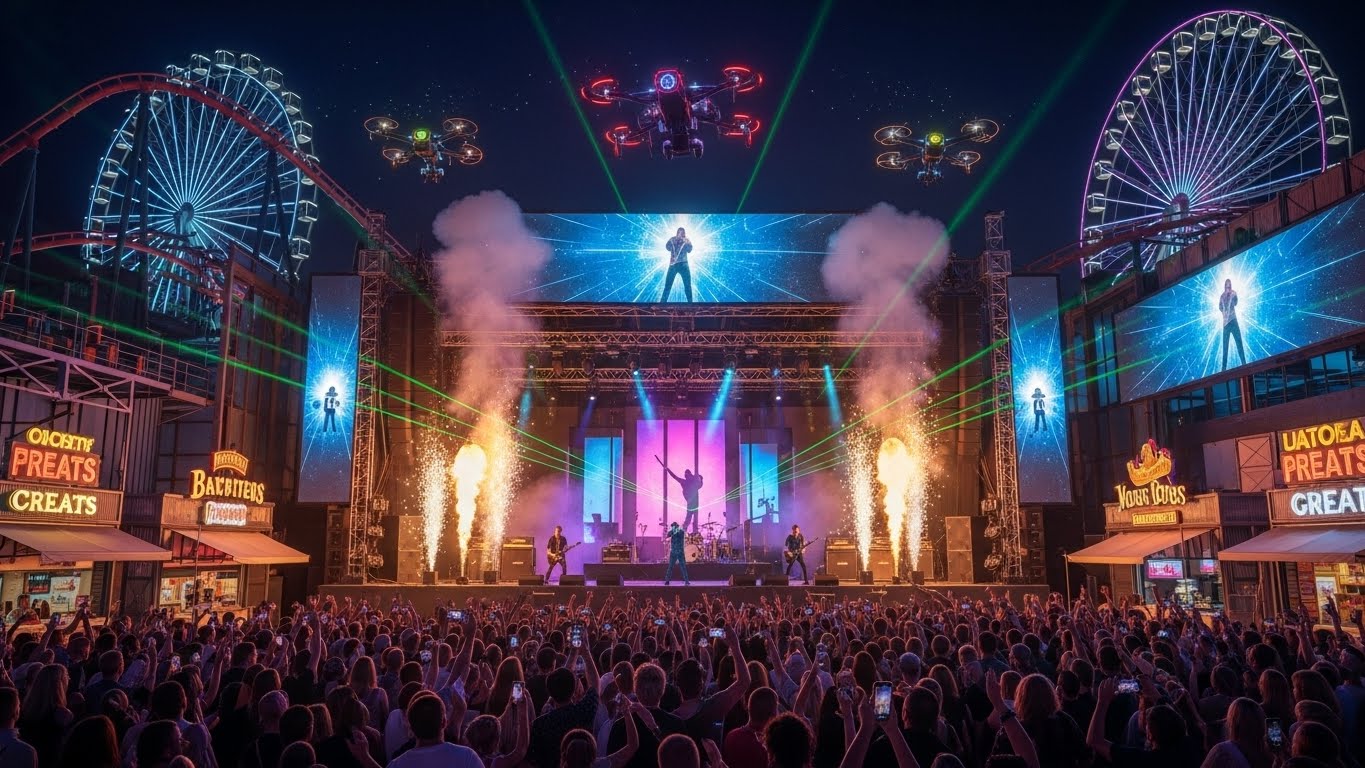
As VR and AR technologies continue to evolve, we can expect them to play a larger role in entertainment. From virtual concerts and immersive movie experiences to interactive theme parks, these technologies will redefine how we engage with entertainment in the future.
The Future of Entertainment: Endless Possibilities
The future of entertainment is incredibly exciting, with technological advancements continuing to reshape the industry. As artificial intelligence (AI) becomes more advanced, we may see AI-generated content, such as personalized movies or music tracks, that adapt to individual preferences. The rise of 5G technology will further enhance the mobile entertainment experience, allowing for faster streaming and more immersive virtual experiences.
In the coming years, entertainment will become even more interactive, immersive, and personalized. We may witness the merging of physical and digital worlds, where entertainment is experienced in ways that are beyond our imagination today. From fully immersive VR experiences to AI-powered content, the future of entertainment promises endless possibilities.