Introduction: The Pulse of Modern Escape
Entertainment has become more than a leisure activity. It is the pulse that guides our breaks, shapes our conversations, and colors our imaginations. Whether it arrives through film, music, gaming, theater, or digital stories, entertainment gives us permission to step into worlds that do not demand anything from us except attention. In an increasingly fast and complex world, the way we consume entertainment tells us more about ourselves than we might expect. This blog explores how entertainment continues to evolve, influence our emotions, and connect us in ways that feel almost magical.
The Emotional Power of Stories
Stories have always been at the heart of entertainment. Long before screens or stages, humans gathered around fires to narrate tales of triumph and fear, love and betrayal. Today, although our tools have evolved, our desire to experience stories has not changed. Films make us cry for characters we have known for only two hours. Songs capture emotions we struggle to express. Books pull us into universes built entirely on imagination.
This emotional resonance is what makes entertainment essential. It gives us a safe place to explore feelings that might overwhelm us in real life. When we watch a character overcome adversity, we quietly rehearse our own strength. When we see love blossoming on screen, we remember the sweetness of human connection. Entertainment becomes a mirror that reflects not only who we are, but who we wish to be.
The Rise of Digital Realities
In the last decade, digital platforms have reshaped entertainment into something more immersive and personal. Streaming services have turned our living rooms into miniature theaters. Social media has transformed ordinary individuals into creators with global audiences. Virtual reality and augmented reality have begun blurring the line between what is seen and what is felt.
These digital realities are no longer simply tools; they are entire environments. People can attend concerts inside virtual spaces, play games that respond to their movement, and watch live events happening across the world in real time. This newfound accessibility has democratized entertainment, allowing more voices, more stories, and more creativity to flourish. At the same time, it challenges us to balance immersion with reality, reminding us not to lose ourselves entirely in digital worlds.
The Universal Language of Music
Among all forms of entertainment, music remains the most universal. It transcends language, geography, and culture. A melody can comfort, energize, or empower within seconds. Entire generations are shaped by musical icons who speak to the spirit of their time.
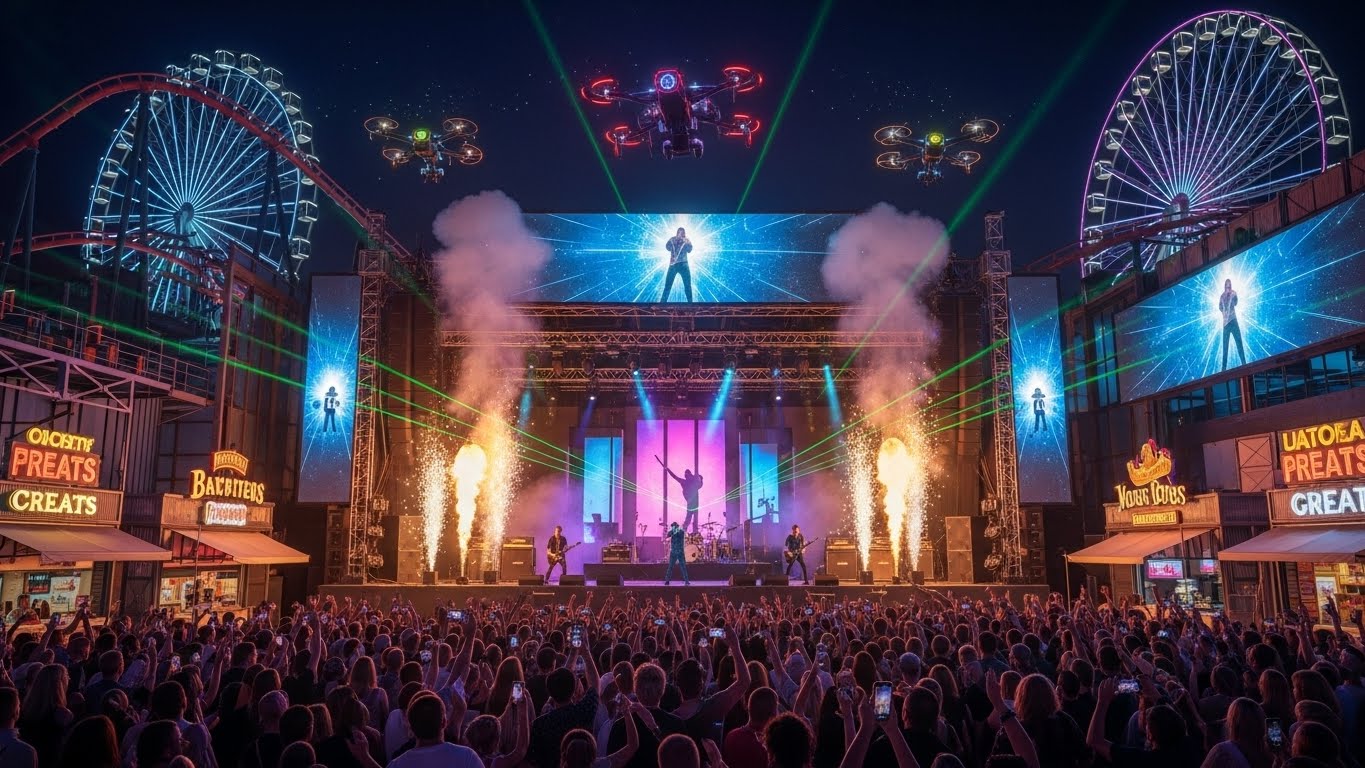
Music also holds the rare ability to connect strangers. At concerts, thousands of people sing together, united by lyrics that mean something different to each person. Even in everyday moments, music sneaks into our routines, accompanying us on morning commutes, workouts, or late-night reflections. It is the rhythm of life, a heartbeat we return to whenever words fail.
The Ever-Evolving Landscape of Film and Television
Film and television remain pillars of global entertainment, continuously reinventing themselves to meet new viewer expectations. Today, audiences crave diversity, depth, and authenticity. They want narratives that challenge stereotypes, explore underrepresented experiences, and push creative boundaries. This shift has encouraged filmmakers to experiment with storytelling styles, genres, and themes.
The result is a richer, more inclusive entertainment world. Complex heroes, layered villains, and morally grey decisions have become the norm. Worldbuilding has grown more ambitious, with visuals that transport us into realms that defy reality. Yet the heart of cinema remains the same. It is still about capturing human emotion in a way that feels timeless.
The Gaming Universe: More Than Play
Gaming is no longer just a pastime for children. It is a multi-billion dollar industry that has redefined how people experience entertainment. Games today combine art, storytelling, music, and technology to create immersive universes that rival blockbuster films.
But beyond the graphics and gameplay, gaming offers something more meaningful: community. Players connect with friends and strangers, often forming lifelong bonds. They collaborate, compete, and communicate across continents. For many, games are a sanctuary where they can relax, express themselves, or simply escape from daily pressures.
The rise of esports has further elevated gaming into a professional arena, with tournaments drawing millions of spectators. This growing legitimacy positions gaming as a cultural force that continues to shape youth identity and digital culture.
The Renaissance of Live Performances
In a world dominated by screens, live entertainment has found new value. Concerts, theater productions, stand-up comedy, and cultural festivals remind us of the joy of shared human experience. There is something electrifying about collective laughter, applause, or awe. The energy in a live venue cannot be replicated digitally.
People crave the authenticity of real-time performances. The imperfections, surprises, and spontaneity of live entertainment create memories that linger long after the event ends. As technology grows, the desire for genuine, unfiltered moments continues to rise.
The Influence of Entertainment on Society
Entertainment is not just a reflection of society; it is a powerful force that shapes our beliefs and behaviors. Films can challenge social norms. Music can spark revolutions. Stories can inspire change. Voices in entertainment often become cultural leaders, influencing discussions around identity, justice, and community.
Beyond social impact, entertainment also affects personal mental health. It offers comfort during loneliness, motivation during struggle, and distraction during stress. It teaches empathy by allowing us to step into someone else’s world, even if only for a moment.
The Future of Entertainment: What Lies Ahead
As technology continues to accelerate, the future of entertainment promises innovation that once felt impossible. Artificial intelligence is already being used to produce music, generate visual art, and assist in script writing. Interactive storytelling is gaining popularity, allowing audiences to control narrative outcomes. Personalized entertainment will soon adapt to individual mood, preference, and even biometric responses.
However, with innovation comes responsibility. The future of entertainment must protect creativity, authenticity, and the emotional well-being of consumers. It must continue to celebrate human imagination, even in a world increasingly shaped by machines.
Conclusion: The Magic We Will Always Chase
Entertainment is more than a distraction; it is a companion to the human experience. It entertains, heals, challenges, and connects us. Whether through the beat of a song, the arc of a character, the thrill of a game, or the glow of a stage, entertainment holds the power to transform ordinary moments into extraordinary ones.