
Entertainment has been an essential part of human life for centuries, evolving in countless forms to meet the needs and desires of people around the world. From theater and literature to radio, television, and film, the ways in which we consume entertainment have always reflected technological advancements of the time. Today, we find ourselves in the midst of an entertainment revolution driven by digital technology, reshaping everything from how we watch movies to how we engage with music, games, and social experiences. In this blog post, we’ll dive into the ways technology is transforming the entertainment world and how these shifts are impacting the way we unwind, connect, and have fun.
The Streaming Era: On-Demand Entertainment at Our Fingertips
If there’s one trend that has revolutionized how we consume entertainment in the past decade, it’s the rise of streaming platforms. Streaming services like Netflix, Disney+, Amazon Prime Video, and Hulu have not only changed the way we watch TV shows and movies but also how we discover content. No longer do we have to wait for a specific time to watch our favorite shows or sift through endless DVDs to find something new. With a few clicks, we can access a world of movies and series at any time, on any device.
What makes streaming so appealing is its convenience. Viewers can watch content at their own pace, pause, rewind, or skip ahead, offering a level of flexibility that traditional cable or broadcast TV never did. Furthermore, streaming services have begun producing original content, which has expanded the variety of shows and movies available. Now, shows like Stranger Things, The Crown, and The Mandalorian can only be found on these platforms, which has sparked a massive shift in how and where people create and consume entertainment. The accessibility of streaming has democratized entertainment, providing both creators and viewers with more opportunities for interaction.
Virtual Reality and Augmented Reality: A New Frontier in Immersive Entertainment
Technology has opened doors to entertainment experiences that were once only imaginable. Virtual Reality (VR) and Augmented Reality (AR) are two of the most exciting innovations to take center stage in recent years, and they are reshaping how we experience entertainment.
In the world of gaming, VR has brought a new level of immersion, allowing players to enter fully interactive 3D environments where they can physically interact with the game world. Whether it’s battling enemies in a virtual arena or exploring fantastical worlds, VR gaming provides a deeply engaging experience that goes far beyond traditional gaming. Games like Beat Saber and Half-Life: Alyx have set new standards in this realm, creating experiences where users are transported to new realities.
AR, on the other hand, overlays digital elements on the real world, making our physical surroundings interactive. One of the most notable examples of AR in entertainment is the Pokémon GO mobile game, which became a worldwide sensation by blending the virtual world of Pokémon with real-world locations. AR has also been used in live performances, where audiences can engage with holograms or experience digital projections in real time. As these technologies continue to evolve, we are likely to see more entertainment experiences that merge the physical and digital worlds in exciting and unpredictable ways.
Social Media and Influencer Culture: Entertainment for the Digital Age
The way we consume entertainment has shifted from passive viewing to interactive, social experiences. Social media platforms like Instagram, TikTok, YouTube, and Twitter have turned everyday people into creators, blurring the lines between audience and entertainer. This shift has given rise to the influencer culture, where individuals with large followings on social media can entertain, educate, or influence others.
Influencers create content that resonates with their audience, whether it’s through short-form videos, live streams, or curated posts. Their ability to build personal connections with their followers has made social media a major source of entertainment. TikTok, for example, has redefined what it means to go viral, with millions of users uploading content that can reach a global audience overnight.
Moreover, live-streaming platforms like Twitch and YouTube Live have opened up new possibilities for real-time entertainment, allowing viewers to watch and interact with streamers while they play games, create art, or chat about their lives. These platforms have transformed entertainment into a two-way street, where fans and creators can directly engage with one another, fostering community and shared experiences.
Gaming: A Global Entertainment Phenomenon
Video gaming has grown far beyond being just a hobby—it has become a massive global entertainment industry. The rise of online multiplayer games and esports has made gaming a truly social activity. Games like Fortnite, League of Legends, and Minecraft have millions of players worldwide, and the online gaming community continues to expand every year.
Esports, or competitive gaming, has taken the world by storm, with professional players, teams, and tournaments attracting millions of fans. The League of Legends World Championship and The International (Dota 2’s annual tournament) are prime examples of how gaming has evolved into a mainstream sport. Esports players and teams can now earn substantial incomes from sponsorships, prize money, and streaming, making gaming a legitimate career path for many.
Furthermore, the introduction of VR gaming and the expansion of mobile gaming have brought new dimensions to the industry. Mobile games like PUBG Mobile and Call of Duty: Mobile allow players to enjoy high-quality gaming experiences on their phones, creating a portable entertainment option that fits into our fast-paced, mobile lives.
Artificial Intelligence: Crafting Personalized Entertainment
As technology becomes more sophisticated, entertainment is becoming increasingly personalized. Artificial Intelligence (AI) plays a key role in this shift. Streaming platforms like Netflix and Spotify use AI algorithms to suggest content based on users’ viewing or listening habits. These recommendations are tailored to individual preferences, ensuring that every user gets a unique experience.
Beyond content recommendations, AI is also used to create entertainment. From AI-generated music to movies and even video games, AI has the potential to revolutionize how entertainment is created. Programs like OpenAI’s GPT-3 have demonstrated the ability to generate written content, while AI music programs can compose new pieces of music in a variety of genres. These technologies not only streamline the creative process but also open up possibilities for new forms of art and entertainment.
AI’s role in entertainment extends to customer service and engagement as well. Virtual assistants, chatbots, and even AI-driven customer support services allow entertainment platforms to offer faster, more personalized service, making the user experience smoother and more enjoyable.
The Future of Entertainment: More Interactivity and Immersion
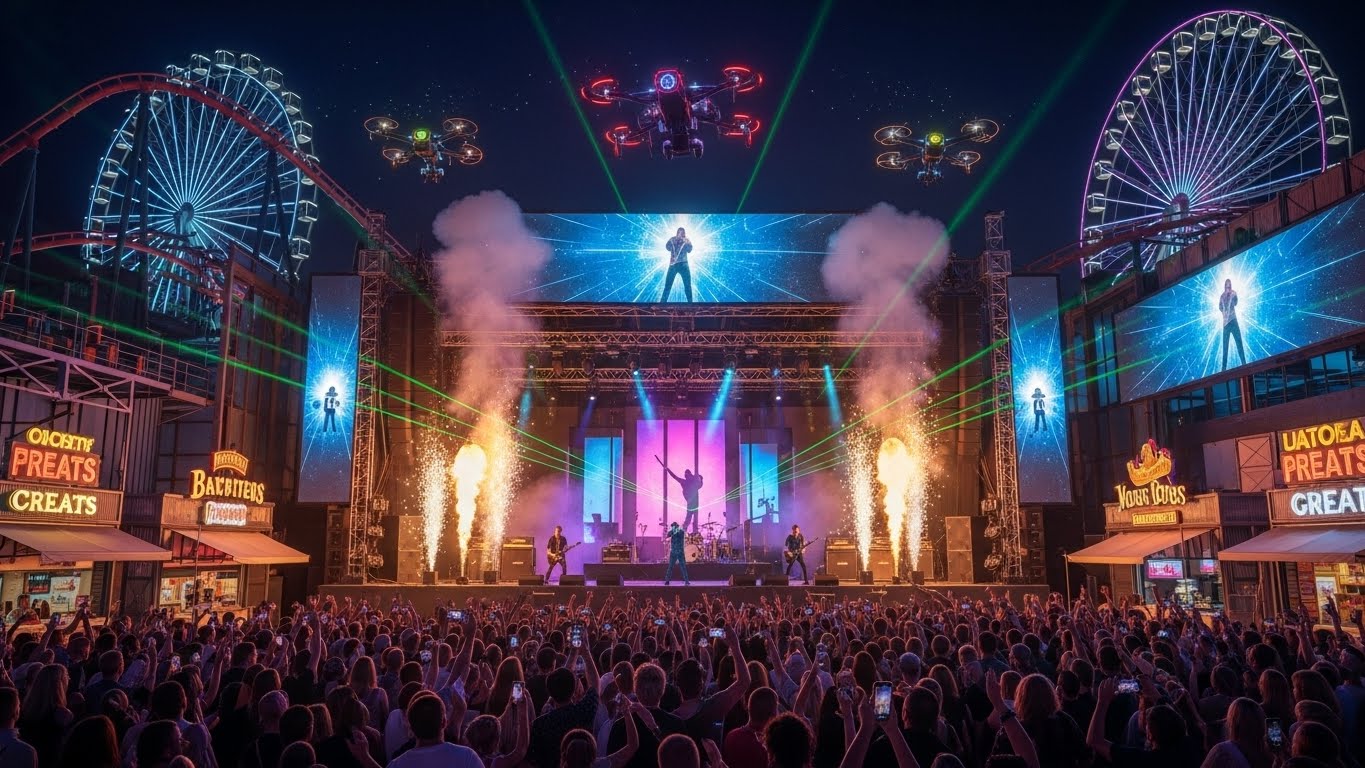
As we look to the future, the possibilities for entertainment seem endless. We are already seeing the convergence of virtual reality, augmented reality, and AI to create interactive and immersive experiences. Imagine attending a concert in a virtual world, where you can interact with other fans, explore virtual spaces, and even influence the show’s direction. This kind of interactivity is where the future of entertainment is heading—experiences that are not just about consumption, but about active participation.
Additionally, as 5G technology becomes more widespread, the potential for high-quality, lag-free streaming of VR content, 4K movies, and live events will be further realized. The combination of faster internet speeds and more powerful devices will make immersive entertainment more accessible to a larger audience.
Entertainment is becoming less about passive observation and more about active engagement. As technology continues to evolve, we will likely see even more groundbreaking experiences that blur the lines between reality and fiction, providing us with new ways to connect, explore, and have fun.
Conclusion: A Bright Future for Entertainment
The entertainment landscape has undergone a massive transformation in recent years, and the future looks even more promising. From the convenience of streaming services to the immersive potential of virtual and augmented reality, technology has made entertainment more accessible, engaging, and personalized than ever before. Social media, gaming, and AI are creating new forms of interactive entertainment, offering audiences unprecedented levels of connection and participation.
As technology continues to evolve, we can only imagine the kinds of experiences that will emerge, giving us new ways to engage with the world of entertainment. One thing is certain: the future of entertainment will be more exciting, more immersive, and more connected than ever before. Whether through VR concerts, interactive gaming, or AI-driven content, the next era of entertainment promises endless possibilities for fun and engagement.