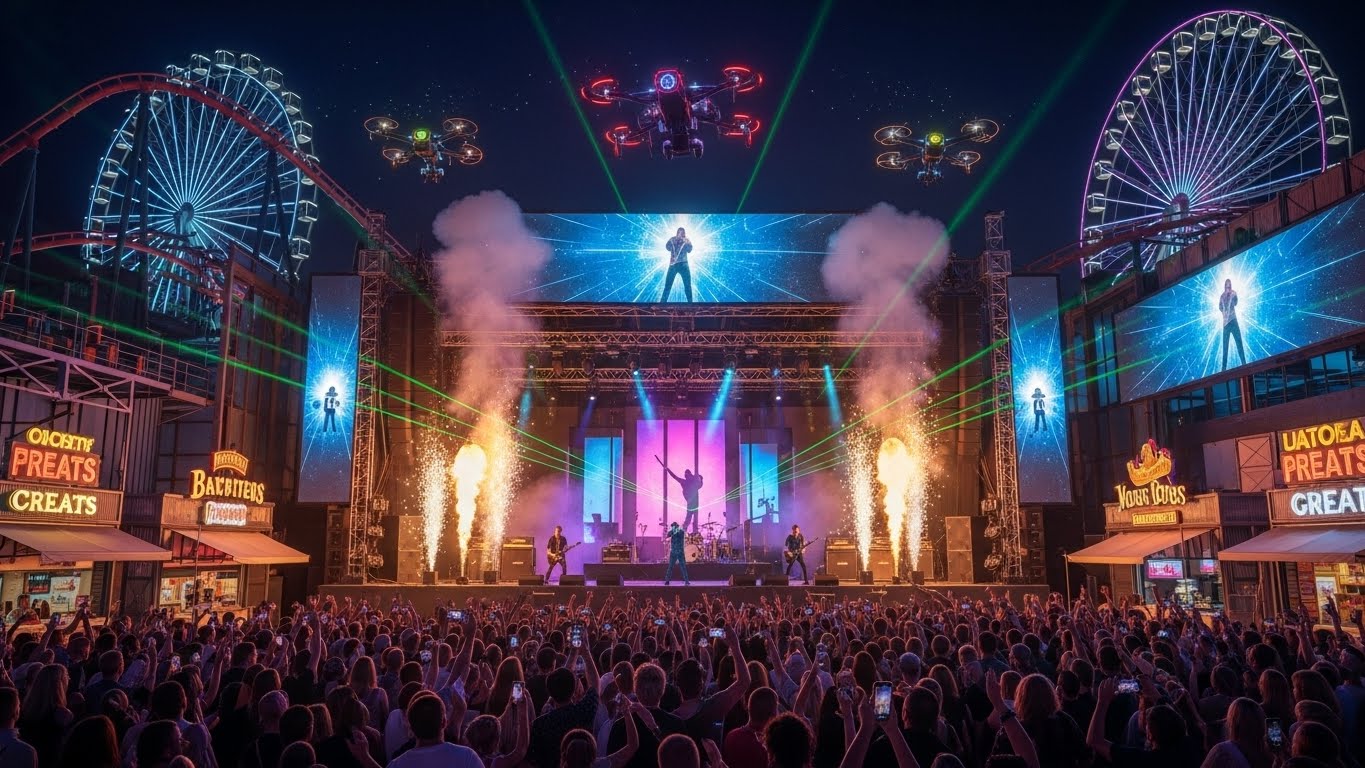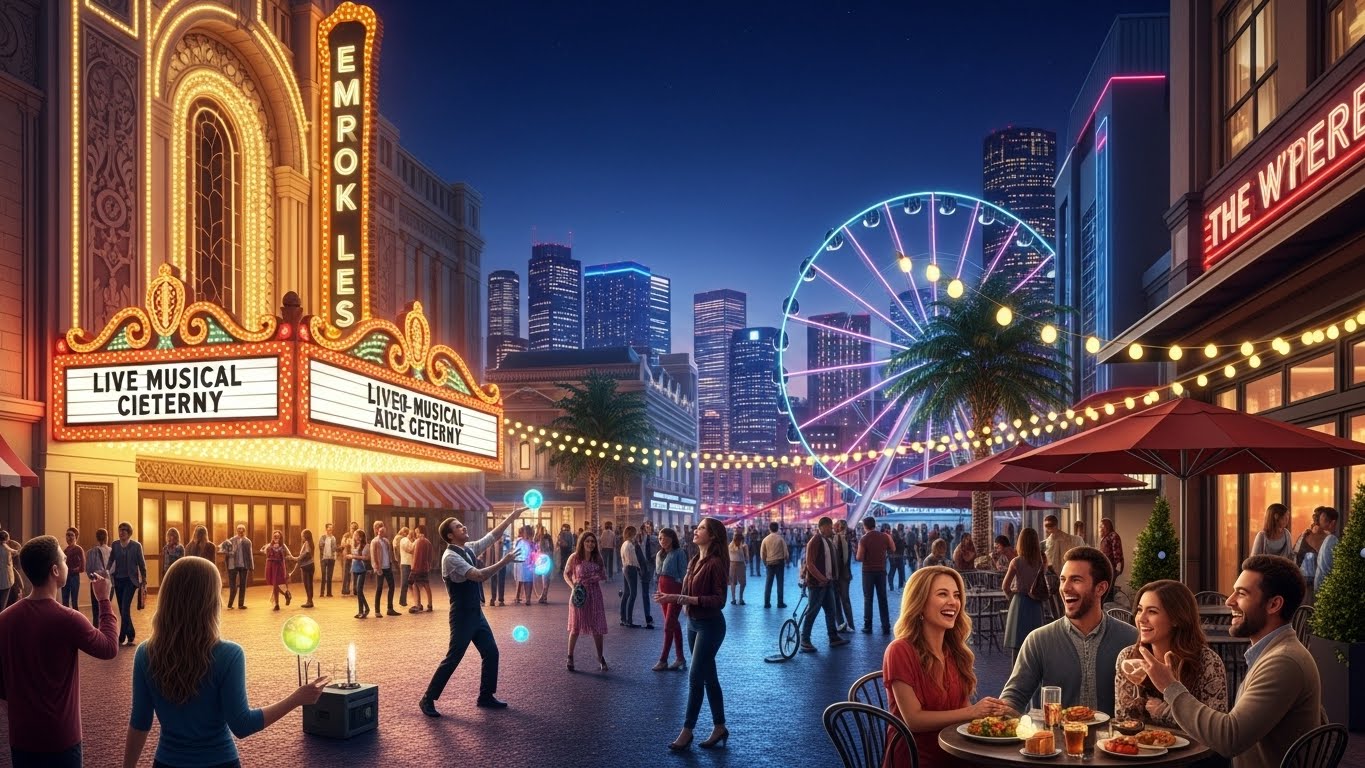

Entertainment, in its many forms, has always been a central part of human existence. It has provided us with moments of joy, relief, and escape throughout the ages. The history of entertainment spans centuries, from ancient rituals and theatrical performances to the rise of television, film, and video games. In recent years, digital platforms have radically transformed how we consume entertainment. In this blog post, we’ll explore the fascinating evolution of entertainment, the ways in which it has shifted over time, and what the future might hold for this ever-changing industry.
The Birth of Entertainment: Traditional Roots
Entertainment, in its earliest form, was rooted in cultural and social traditions. It often served as a means of storytelling, religious practice, or community bonding. Ancient civilizations such as the Greeks and Romans had their own rich forms of entertainment. Theaters, such as the famous Theatre of Dionysus in Athens, hosted plays that were performed for the public. These theatrical performances combined music, dance, and storytelling to entertain and engage audiences.
Similarly, in other parts of the world, such as in India and China, forms of entertainment like dance, drama, and music had both religious and secular functions. Ancient forms of entertainment were tied to cultural values, rituals, and celebrations. Whether it was the Chinese opera or the Indian classical dance, these art forms were highly revered and became a way for communities to come together.
The written word also played a significant role in early forms of entertainment. Literature, including epic poems and novels, provided an avenue for people to immerse themselves in fantastical stories. The works of Shakespeare, for example, provided not just entertainment, but also profound social commentary. It’s clear that the foundations of entertainment have always been shaped by the society in which it evolved, providing meaning and amusement in equal measure.
The Rise of Mass Entertainment: The Industrial Revolution and Beyond
As society evolved, so did entertainment. The Industrial Revolution brought about significant technological advancements, which, in turn, revolutionized how people accessed and consumed entertainment. The printing press made literature widely accessible, and the concept of mass entertainment began to take shape. The 19th century saw the rise of theater and live performances as commercial enterprises, with iconic playwrights like Charles Dickens and Oscar Wilde gaining popularity.
The real game-changer, however, came in the early 20th century with the invention of film and radio. The film industry blossomed in the 1920s, with the creation of Hollywood as the epicenter of cinematic innovation. Silent films, followed by “talkies,” introduced new forms of visual and auditory storytelling that captivated audiences worldwide. Movie palaces became cultural landmarks, and cinema began to dominate the entertainment scene.
Radio further expanded the scope of mass entertainment, offering music, news, dramas, and comedy shows to people in their homes. By the 1930s, families gathered around the radio to listen to iconic broadcasts like “The Lone Ranger” or Franklin D. Roosevelt’s fireside chats. This was the beginning of entertainment becoming a household activity.
In this era, the entertainment industry began to consolidate its hold on the public imagination. Hollywood stars like Charlie Chaplin, Greta Garbo, and Clark Gable became household names, and film studios began to churn out movies at an unprecedented rate. The 1940s and 1950s saw the emergence of television, which would eventually become the dominant medium for entertainment in the 20th century.
The Golden Age of Television: The 1950s to the 1980s
The 1950s marked the birth of the television era. With the invention of color TV and the growing availability of televisions in American homes, the small screen quickly became the dominant form of entertainment. Iconic shows like “I Love Lucy,” “The Twilight Zone,” and “The Ed Sullivan Show” entertained millions of viewers, making television an integral part of daily life.
The 1960s and 1970s introduced groundbreaking television programs that reshaped entertainment. Shows like “The Simpsons” and “Star Trek” became cultural touchstones, and the popularity of these programs led to the creation of new genres, such as the sitcom and the sci-fi series. Television also began to diversify, introducing more varied and experimental content. This period saw the rise of soap operas, game shows, and reality TV, which would go on to influence entertainment for decades.
The 1980s further propelled television into the mainstream, with cable television networks like MTV and CNN changing the landscape of news and music. The increasing availability of cable television brought a wide array of programming to consumers, offering everything from 24-hour news coverage to music videos to new genres of film and television. The 1980s also saw the arrival of the home video cassette recorder (VCR), which gave viewers the ability to watch movies at home, sparking a new era of entertainment consumption.
By this point, television had firmly cemented its place as the centerpiece of home entertainment, shaping much of popular culture. People could watch television shows in the comfort of their living rooms, and the ability to record and replay content allowed viewers to curate their own entertainment schedules.
The Digital Revolution: Entertainment in the Age of the Internet
The most significant transformation in the entertainment industry occurred in the late 1990s and early 2000s, with the rise of the internet and digital technology. This revolutionized everything from how entertainment was produced to how it was consumed. The advent of broadband internet and the proliferation of personal computers made it easier than ever for people to access a vast array of entertainment options.
The emergence of digital streaming services like Netflix, Hulu, and Spotify disrupted the traditional models of television, film, and music distribution. Instead of waiting for a specific time slot to watch a TV show or going to a physical store to buy a CD, consumers could access their favorite entertainment instantly from anywhere, at any time. This shift drastically changed viewing habits and expectations. Binge-watching, for example, became a cultural phenomenon with the advent of platforms like Netflix, which released entire seasons of shows at once, allowing people to watch multiple episodes in a single sitting.
The internet also introduced new forms of interactive entertainment. Video games, once confined to arcade machines, found a new home on personal computers and gaming consoles. Online gaming took off, with multiplayer games allowing people to connect across the globe and compete against one another in real time. Social media platforms like YouTube, Instagram, and TikTok allowed everyday people to become creators, leading to the rise of influencer culture and the democratization of content creation.
At the same time, the rise of virtual reality (VR) and augmented reality (AR) opened up new possibilities for immersive entertainment experiences. Companies like Oculus and PlayStation VR made it possible for users to step into entirely new worlds, blurring the line between gaming, storytelling, and experiential entertainment.
The Future of Entertainment: A Virtual Horizon
As we look toward the future, it’s clear that entertainment will continue to evolve in exciting and unpredictable ways. Advances in artificial intelligence (AI) and machine learning have already begun to influence how entertainment is created and consumed. AI-generated content, such as deepfake videos and AI-written scripts, is already making waves in the film and television industries.
The metaverse, a virtual reality space where users can interact with a computer-generated environment and other users, is expected to be a major part of the future of entertainment. In this interconnected world, people will be able to attend virtual concerts, explore digital worlds, and engage with content in ways that were once unimaginable.
Streaming services are likely to continue dominating the entertainment landscape, but the next frontier may involve the integration of augmented reality and virtual reality with traditional media. Imagine watching a film where you can move through the story as if you were part of it, or experiencing live theater from your living room with VR headsets. The potential for hybrid forms of entertainment, where the physical and digital worlds merge, is vast.
Furthermore, entertainment will likely become even more personalized. With the help of AI and data analytics, platforms can curate content that matches a user’s preferences, creating a tailored experience that is unique to each individual. The future of entertainment may involve a shift from passive consumption to active participation, where viewers and players are given more control over the stories they engage with.
Conclusion
The entertainment industry has come a long way, from the primitive rituals of ancient civilizations to the digital streaming services of today. It’s a story of constant change, fueled by technological advancements and shifting cultural trends. What started as a way to engage with one’s community has grown into a global, multi-billion-dollar industry that impacts billions of people worldwide.
The evolution of entertainment is a testament to humanity’s creativity and desire for connection, and while we can’t predict exactly what the future holds, one thing is certain: entertainment will continue to play a vital role in our lives. Whether through traditional mediums like film and television, or through cutting-edge technologies like virtual reality and AI-generated content, the quest for joy, laughter, and escape will remain a universal part of the human experience.